
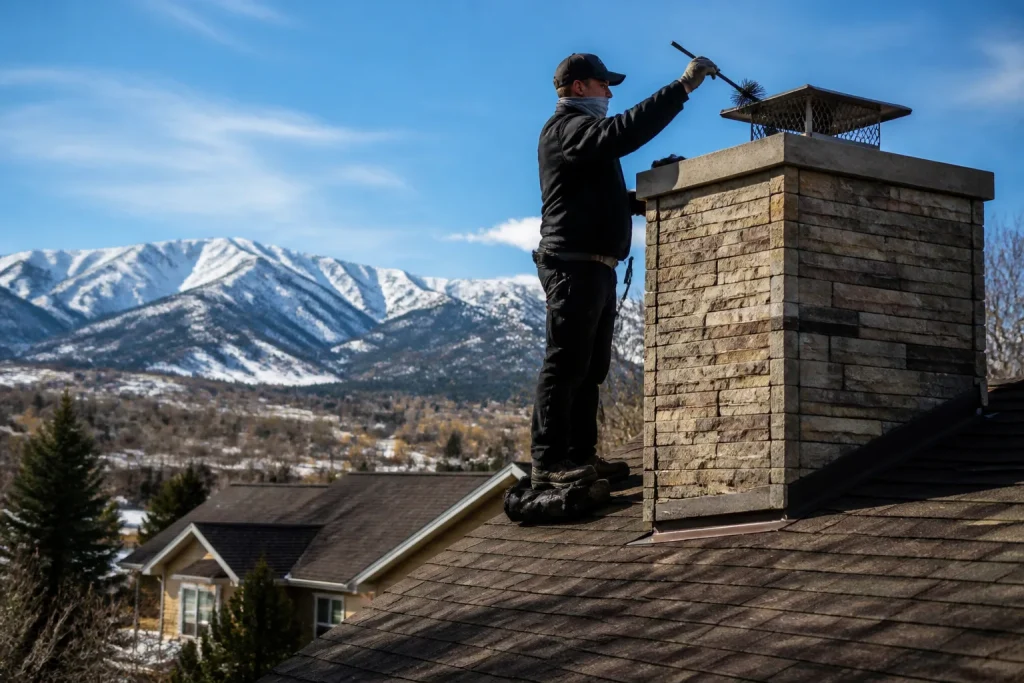
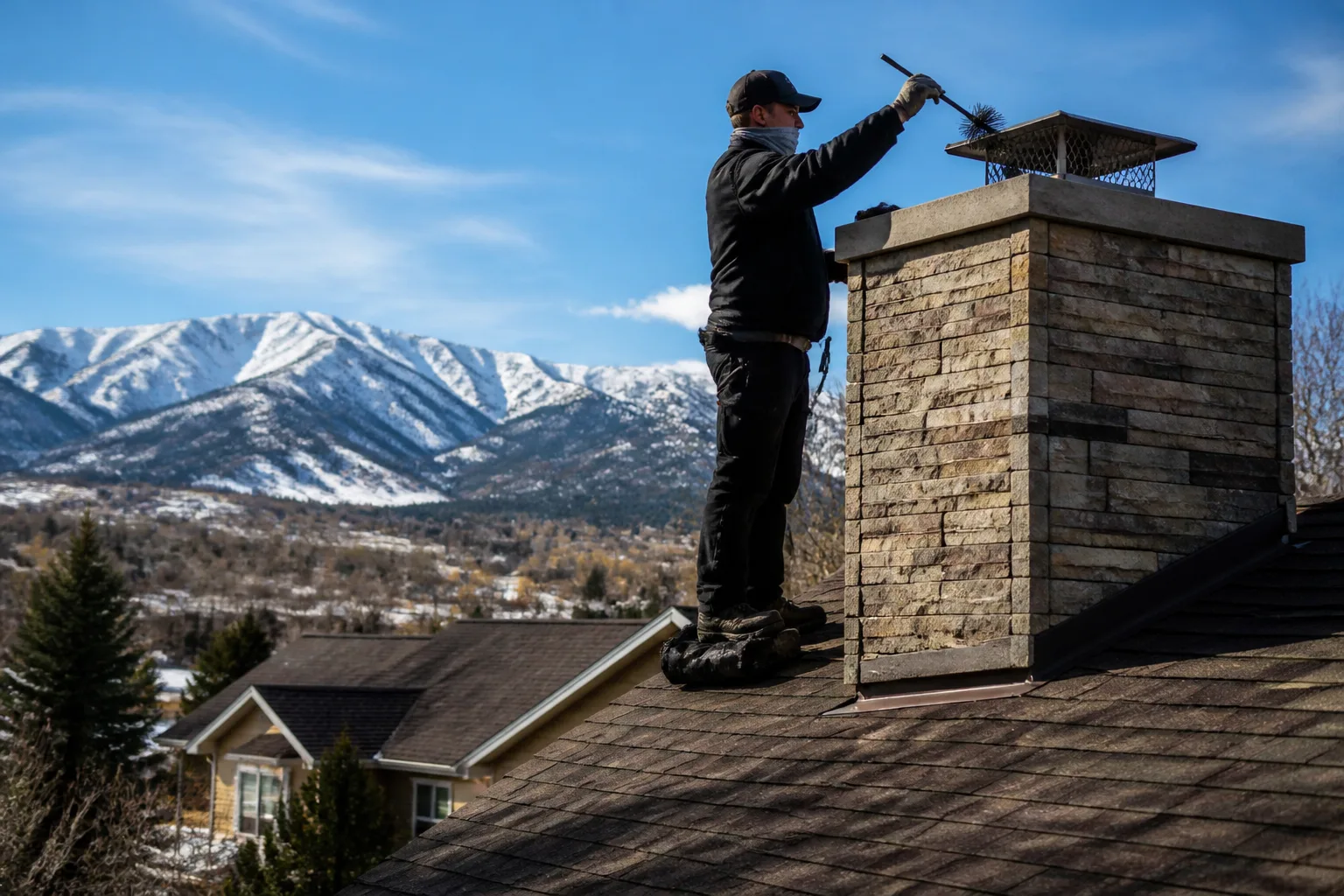
Emergency Chimney Sweep Near Me: What University Park Homeowners Should Do First
If you think your chimney is on fire, close the damper and the glass doors, get everyone out of the house, and call 911 before you call anyone else. Once the fire department has cleared the house, that’s when you call a chimney professional for an inspection and sweep. Most University Park homeowners do it backward – they search for help while the flue is still open and the draft is still feeding whatever is burning inside it. If you’d rather skip the guesswork, call (888) 848-9521.
What Should You Do Before Any Technician Arrives?
Sequence matters more than speed here. A chimney fire draws on the air supply coming up through the firebox, so the very first move is to cut that supply off. Do these in order, and don’t skip ahead:
- Close the damper. This starves the fire of the updraft running through the flue. If you have glass doors on the fireplace, shut them too.
- Get people and pets outside. Smoke and carbon monoxide move faster than you’d expect. Leave the house, then call 911 from outside.
- Check your CO detector reading. If it’s alarming or you have no detector at all, tell the dispatcher. Carbon monoxide is odorless, and a blocked or damaged flue is one of the ways it backs into a home.
- Shut down the HVAC system. A running furnace or air handler can pull smoke and CO through return ducts and spread it through rooms far from the fireplace. Turn the system off at the thermostat.
- Don’t spray water into the firebox. A sudden temperature drop can crack clay tile, and water on a hot flue is a good way to turn a contained problem into a structural one.
That last point matters in University Park, where a lot of homes still have their original clay tile liners. Those tiles handle heat well when they’re intact, but they crack under thermal shock, and a cracked tile is exactly the kind of thing that turns a chimney problem into a carbon monoxide problem. We answer 24/7. Fast dispatch from 7am to 7pm, Sunday through Friday.
How Do You Tell a Chimney Fire From a Loud Draft?
A chimney fire doesn’t always look like fire. Many burn hot and fast with almost no visible flame from the firebox, which is why homeowners mistake them for a draft problem or a noisy flue. The cues below are the ones we hear most often, and they cluster together – one on its own is less telling than three at once.
- Sound: a low, rumbling roar like a freight train or a distant jet, not the ordinary whoosh of a fire catching. Popping or crackling that continues well after you’ve stopped adding wood is another sign.
- Smell: a sharp, hot, almost metallic burning smell, or strong smoke inside a room that normally drafts clean. Creosote burning has a distinct acrid edge.
- Sight: dense smoke or sparks from the top of the chimney, a glow visible at the cap, or flames and shimmering heat rolling out of the flue mouth.
- Feel: the chimney breast or surrounding wall feeling hot to the touch, or the stovepipe and damper handle warmer than usual.
A loud draft, by contrast, is steady, has no burning smell beyond normal wood smoke, and settles once the fire is established. If you’re unsure, treat it as a fire. The cost of a false alarm is an inspection. The cost of the alternative is a lot worse. It also helps to know what a chimney fire leaves behind – glazed, puffy creosote in the flue and, often, hairline cracks in the liner that aren’t visible from below. That’s the reason we don’t just sweep after a suspected fire; we perform a dedicated chimney inspection, camera and all, so you can see what we see.
Why Not Call a Handyman or HVAC Company?
Chimney work is its own trade, and a general handyman or an HVAC company that sweeps chimneys on the side leaves gaps in the record that can cost you later. An HVAC tech knows ductwork and combustion appliances; a handyman knows a dozen trades a little. Neither spends their days inside flues, evaluating liners, or reading creosote glaze. When an emergency inspection needs to stand up to an insurance adjuster, that distinction matters.
Here’s the practical difference in University Park. A rushed, non-specialist visit tends to end with a verbal “looks fine” and no documentation. A legitimately certified sweep inspects the full system – firebox, damper, smoke chamber, flue, crown, cap – and photographs what they find. That photo set is what supports an insurance claim if the fire reached framing or required liner work. We work with professional-grade materials – HeatShield for resurfacing a deteriorated flue, DuraFlex flexible liner systems for wood, gas and oil appliances – because the repair needs to match the source of the problem, not just the symptom. One call covers it: sweep, inspection and repair don’t require tracking down three different contractors.
What Does a Real Emergency Inspection Actually Cover?
An emergency inspection is more than a flashlight down the flue. It’s a structured evaluation of every part of the system that fire, heat and creosote can touch, and it should leave you with a written record you can hand to your insurer.
- A camera inspection of the flue to check for cracked tiles, gaps at joints, and glazed creosote
- A close look at the firebox, damper, smoke chamber and any warped or damaged metal components
- A check of the crown and cap for heat damage or obstruction that could have contributed to the event
- A carbon monoxide check and confirmation that draft is behaving correctly when the appliance is running
- A photo report of what was found, what needs attention, and what can safely wait
We’ll tell you exactly what we find, and we won’t recommend liner or masonry work you can’t verify on camera yourself. If the flue is sound and only needs a sweep, that’s the answer you’ll get. If a section of liner has spalled or cracked, a resurfacing approach with HeatShield can sometimes repair it in place rather than a full reline – a distinction a sweep-only service can’t offer, because resurfacing isn’t a cleaning job. Where a full reline is the correct call, DuraFlex systems let us handle wood, gas or oil appliances in a single visit, so you’re not handed off to a third party and left chasing paperwork.
Why Older University Park Homes Need a Different Post-Fire Protocol
Homes with original clay tile liners deserve extra attention after any suspected chimney fire. Those tiles were sized for the appliances of their era, and many have been asked to vent modern, hotter-burning appliances for years. Clay is brittle, and a fire hot enough to glaze creosote is hot enough to open cracks that don’t show on a quick visual check from the roof.
The post-emergency protocol for these homes is a full camera inspection before the fireplace is used again, not a cleaning and a pat on the back. Any tile with a crack, spall or displaced joint needs to be documented and repaired – often with a resurfacing system such as HeatShield or, where damage is extensive, a full liner replacement. We also check the crown and cap, since heat damage up top is easy to miss and lets water into the same flue you just had inspected. That’s the kind of full-scope work you’d expect from a company focused exclusively on chimneys rather than a multi-trade outfit where chimney work is a secondary line. We source our components from professional supply brands – Gelco, Olympia Chimney, Famco – because the materials behind a repair are what hold up over the long run. Our technicians have up to 15 years of experience.
When to Call a Pro
Call a pro immediately if you smelled or heard anything that suggests a chimney fire, even if the fire is out, and before you use the fireplace again after any event. Call earlier if you’re a new homeowner with no record of the chimney’s last inspection. And if you notice smoke backing into the room, a CO detector going off near the fireplace, or a damaged cap, don’t wait for the next cold snap. For the routine side of this – your annual cleaning and a pre-season check – a standard chimney sweep before the burning season starts catches most of the problems this article describes before they become emergencies. If a repair is needed after the inspection, our fireplace repair covers the firebox and damper side, and our chimney cap & crown installation handles the top of the system where heat and weather do their damage. One call covers the whole thing, from first inspection through the final repair.
Related services in University Park: chimney sweep, fireplace repair, chimney cap & crown.
The Bottom Line
If your chimney might be on fire, the order is: close the damper, get everyone out, call 911, shut down the HVAC, then call a chimney professional for inspection and sweep. Don’t reach for your phone before you’ve made the situation safe, and don’t hand a post-fire inspection to a generalist. In University Park, homes with original clay tile liners need a camera inspection before anyone lights a fire again, and you should walk away with a photo report that shows what was found and what can wait. If you’re in University Park and need help, University Park Chimney Sweep offers free estimates – call (888) 848-9521.
Frequently Asked Questions
A standard chimney sweep usually runs in the low-to-mid hundreds of dollars, and an inspection with a camera report typically adds to that. The written estimate sets the final price, and it’s free to get one. Call (888) 848-9521 for an exact quote.
Not always. A camera inspection tells you whether the liner is intact, cracked, or resurfaced-worthy. Sometimes a HeatShield resurfacing repairs the flue without a full reline, and sometimes replacement is the only safe option. Nothing is recommended without photo evidence you can see yourself. Call (888) 848-9521 for an inspection estimate.
Most chimneys should be swept annually, and more often if you burn heavily or notice creosote buildup. A yearly inspection also catches cap and crown damage before it lets water in. Call (888) 848-9521 to book a sweep and inspection in University Park.
Creosote builds up, glazes, and can fuel a fire hot enough to crack tile and reach framing. The flue also stops drafting cleanly, which raises carbon monoxide risk. A yearly sweep and inspection is the cheapest way to avoid both. Call (888) 848-9521 for a free estimate.
Written by the team at University Park Chimney Sweep.
Need Chimney Cleaning Help?
Call University Park Chimney Sweep - the local pro we connect you with is licensed and insured, with free written estimates in University Park.
(888) 848-9521