
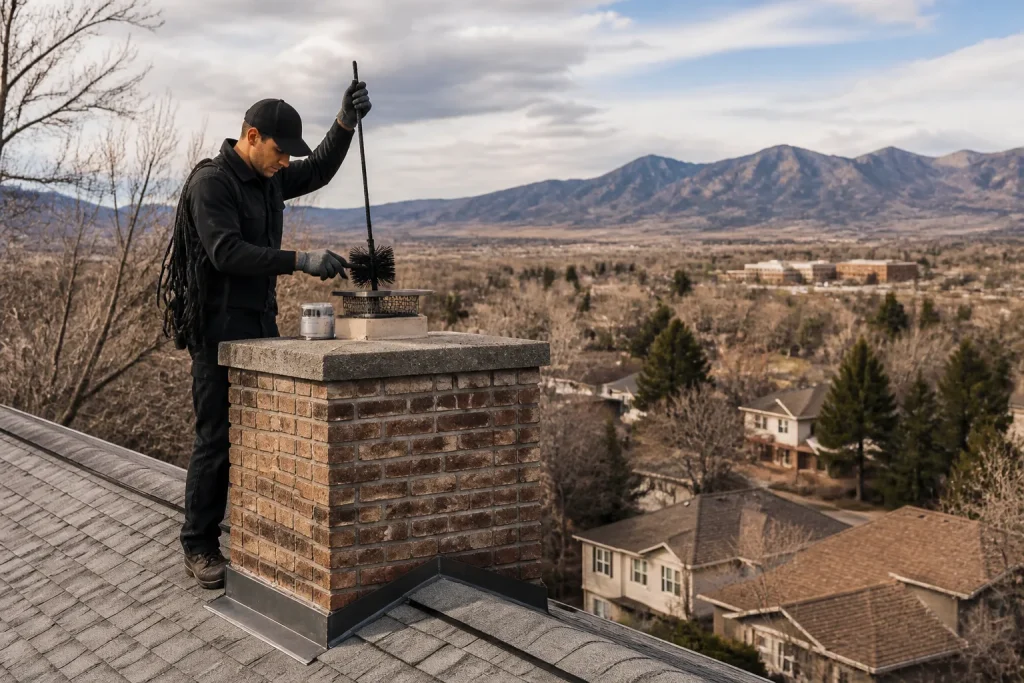
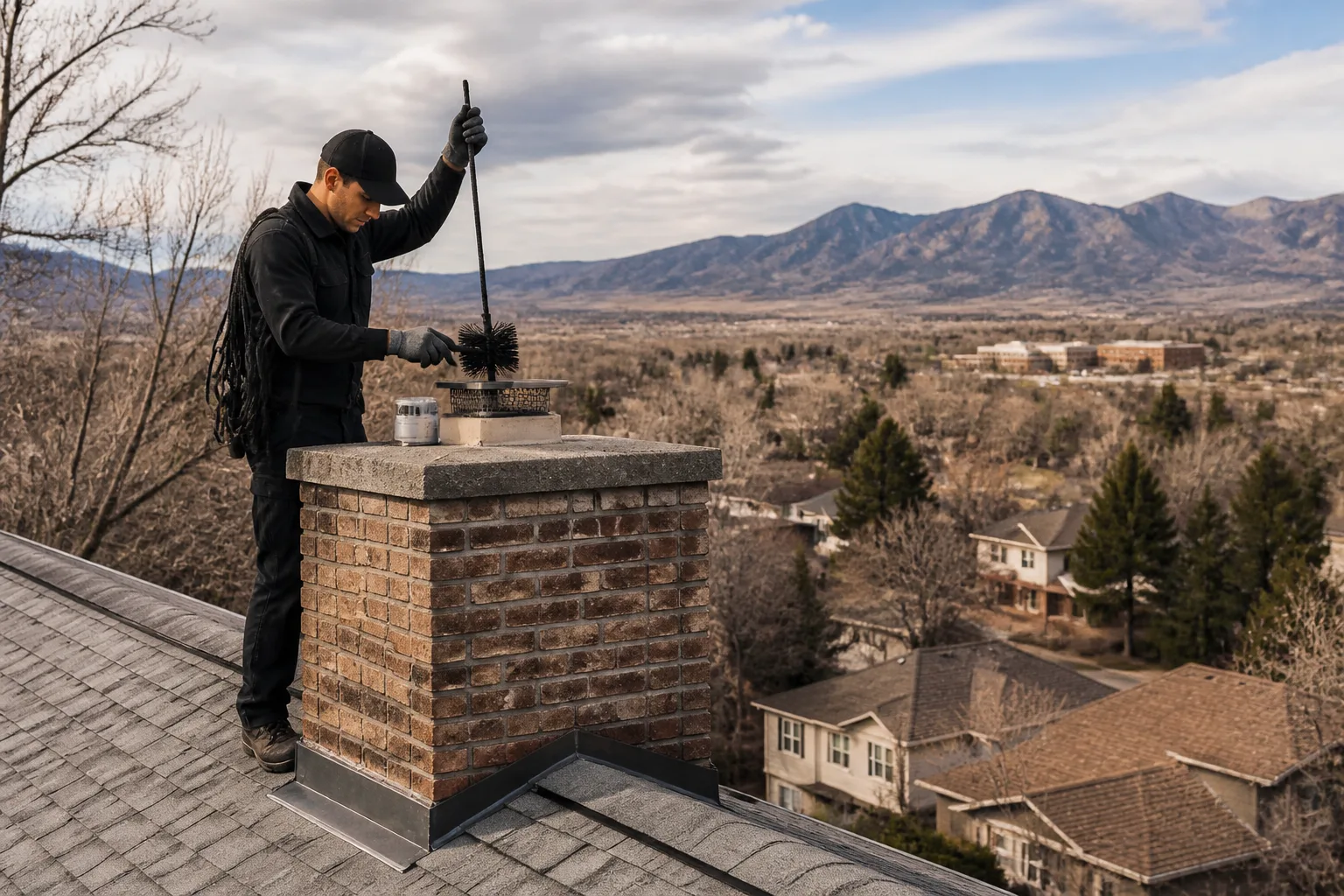
HeatShield Chimney Sweep in University Park: A Homeowner’s Guide
Most University Park homeowners who actually need HeatShield have been told they need a full stainless steel liner instead. That recommendation isn’t always wrong, but it’s not always right either, and it’s a repair that can run two to three times the cost of resurfacing. Before you commit to a reline, it’s worth understanding what HeatShield does, what it fixes, and where a masonry liner is still the better call. If you’d rather have a specialist look at your flue before deciding, call (888) 848-9521.
What Is HeatShield, and Why Isn’t It Just a Coating?
HeatShield is a resurfacing system for masonry chimney flues, not a cleaning product and not a sealant. A technician applies a ceramic compound to the inside of the flue, and that compound bonds directly to the existing clay tile or masonry and cures into a hard, heat-resistant surface. Once cured, it functions as part of the liner itself, not a film sitting on top of it.
That distinction matters. A sealant is a thin barrier that fills surface pores and wears away over time. A coating is decorative. HeatShield is designed to rebuild the structural integrity of a deteriorating flue from the inside, restoring the smooth, continuous surface that a chimney needs to vent safely. In our experience working with HeatShield, the difference shows up years later: the compound stays bonded to the masonry, and the flue keeps its shape through heating cycles.
A few things HeatShield is and isn’t, in plain terms:
- It is: a permanent resurfacing of a deteriorated but otherwise sound masonry flue.
- It is: a way to restore a smooth interior without removing the existing liner.
- It is: applied by a trained technician who first confirms the flue is a candidate.
- It isn’t: a coat of paint over cracks. It has thickness and bonds to the substrate.
- It isn’t: a fix for a flue that has separated from the chimney structure or lost tile entirely.
A masonry flue in University Park that’s still holding together but has rough interior surfaces is often a good candidate. One that’s failing structurally is a different conversation.
What Deterioration Does HeatShield Actually Fix?
HeatShield is designed for the middle ground: a flue that’s clearly degrading but still has enough integrity to support a resurfaced interior. The conditions it handles well are the ones that show up on a video inspection as surface-level damage rather than structural failure.
The specific conditions it addresses:
- Spalling: flaking and pitting of the clay tile surface, where small chips break away and leave a rough interior.
- Joint erosion: the mortar joints between tiles wearing back, creating gaps and ledges where creosote can collect.
- Minor cracking: hairline and small cracks that haven’t separated the tile or opened into the surrounding masonry.
Where it’s not the right call: a flue with missing or badly displaced tiles, a liner that has pulled away from the chimney wall, significant offset or gap issues, or damage that extends into the surrounding brickwork. In those cases, a flexible liner system is the honest answer, and we’d tell you so. We work with University Park Chimney Sweep as our home base for exactly this kind of assessment, and the guidance is the same whether the answer is resurfacing or relining.
If a flue is swept and inspected and the damage turns out to be minor surface wear, HeatShield can be the repair that makes the difference between a flue that lasts and one that keeps getting worse. When the damage crosses into structural territory, no resurfacing product will hold, and heat stress on the chimney can compound the problem.
How a University Park Technician Determines if HeatShield Is Right for Your Flue
The assessment starts with a Level II video inspection, which is a camera scan of the full length of the flue. A visual look from the firebox isn’t enough: the damage that matters most is usually out of sight, above the smoke chamber or around a bend. The camera shows tile joints, cracks, spalling and gaps directly, and the technician records what they find.
The step-by-step looks like this:
- A standard chimney sweep of the flue so the camera can see the true condition of the liner.
- A Level II video inspection of the full flue length.
- Review of the footage with you, pointing out exactly where the damage is and how severe it is.
- A determination: resurface with HeatShield, reline with a flexible liner system, or in some cases rebuild the affected section.
The video is the key part. You should see the same evidence the technician sees, on screen, before any repair is recommended. We’ll tell you exactly what we find, and we won’t recommend a repair the footage doesn’t support. If the flue can wait another season, we’ll say that too. Working with established supply brands like Olympia Chimney and Copperfield means the materials for whichever repair is right are sourced from professional distributors, not pulled off a hardware store shelf.
When Does HeatShield Save You Money, and When Doesn’t It?
HeatShield is a repair that can save money, but only when the flue qualifies. On a masonry flue with surface-level damage, resurfacing typically costs significantly less than a full stainless reline, and that savings can be substantial. On a flue with structural failure, HeatShield isn’t a saving, it’s a delay, and it can cost you more when the underlying problem has to be fixed anyway.
The comparison in plain terms:
| Condition | Typical approach | Cost relationship |
|---|---|---|
| Spalling, joint erosion, minor cracking | HeatShield resurfacing | Lower cost than a full reline |
| Missing or displaced tiles, structural gaps | Flexible liner system (DuraFlex) | Higher cost, but the only repair that holds |
| Light surface wear, no damage | No repair, keep sweeping | No repair cost at all |
Here’s where the cheapest short-term fix becomes a liability. A flue that’s patched or coated rather than properly resurfaced can fail on an inspection report when you sell the home, and an insurer can push back on a claim if the flue liner wasn’t maintained to a safe standard. The savings from taking the quick route can vanish the moment you need to document the flue’s condition. A repair done with the right system and a written record is worth more than a lower invoice with no accountability behind it.
What to Expect During and After a HeatShield Application
A HeatShield application takes most of a day for a typical residential flue in University Park, depending on length and access. The technician prepares the flue, applies the compound with a tool sized to the flue, and the compound cures into a hard surface. The curing process is the part homeowners ask about most, and it’s straightforward when the instructions are followed.
What to do while the flue cures:
- Don’t light a fire until the technician confirms the curing time for your application is complete.
- Keep the firebox area clear during application and follow the technician’s instructions on the damper position.
- Expect some odor from the compound while it cures; proper ventilation of the room helps.
- After the curing period, run a small break-in fire before resuming normal use of the fireplace.
Once the flue is cured and in use, keep up your regular sweeping schedule so creosote doesn’t build back up on the resurfaced liner. The repair holds, but it still needs the same maintenance any flue does.
If your fireplace has other issues, like a failing damper or damaged firebox panels, those get handled as part of the same visit through fireplace repair. A flue that vents cleanly isn’t much comfort if the fireplace itself isn’t sound.
When to Call a Pro Instead of Waiting
Some chimney problems can wait a season. Others shouldn’t. Call a professional if you notice a strong creosote smell that doesn’t clear, smoke coming back into the room, visible cracks in the firebox or smoke chamber, or a damper that won’t open and close properly. In University Park, cold winters mean the fireplace gets used hard, and a flue with known damage has less margin before it becomes a safety issue.
A flue liner that’s damaged can let heat and combustion gases reach the chimney structure, which is where chimney fires start. Carbon monoxide is the other concern: a compromised flue can allow an appliance’s exhaust to escape into the home instead of up and out. We’re not going to tell you every rough-looking flue is about to fail. The point is that the flue’s condition should be known before the season starts, not guessed at.
If your chimney needs a lid or its crown is crumbling, that’s handled under chimney cap & crown. Getting a proper cap installed goes a long way toward keeping water out of the flue, and water intrusion is one of the main drivers of the liner deterioration HeatShield is designed to fix.
The Bottom Line
HeatShield is a real repair, not a cleaning product or a cosmetic coating. It makes sense when a masonry flue has spalling, joint erosion or minor cracking but is still structurally sound. It doesn’t make sense when the flue has lost tiles or the damage has spread into the surrounding masonry, and in those cases we’d recommend a flexible liner instead. The decision comes down to a Level II video inspection, and you should see the footage before you agree to anything.
What sets our approach apart is the inspection-first posture: the video, the evidence, and an honest recommendation about whether a repair can wait. Our technicians have up to 15 years of experience, and we work with professional-grade materials from HeatShield, DuraFlex, Gelco, Famco, Olympia Chimney and Copperfield. If you’re in University Park and need help, University Park Chimney Sweep offers free estimates: call (888) 848-9521. We answer 24/7. Fast dispatch from 7am to 7pm, Sunday through Friday.
Frequently Asked Questions
They solve different problems, so it depends on the flue. HeatShield restores a masonry flue with surface-level damage and costs less than a full reline. A stainless liner is the right repair when the flue has structural failure, missing tiles or gaps that resurfacing can’t bridge. The video inspection tells you which one you actually need. Call (888) 848-9521 for an honest assessment.
A properly applied HeatShield resurfacing is designed to be a permanent repair of the flue’s interior, not a temporary patch. It holds as long as the surrounding masonry holds and the flue is maintained with regular sweeping. Call (888) 848-9521 to schedule a visit.
Insurers can ask for documentation of a chimney’s condition, especially if the flue has a history of damage. A repair done with a recognized resurfacing system and documented with an inspection report gives you a clear paper trail. A short-term patch with no record can create pushback at claim time. Call (888) 848-9521 to book an inspection.
No. The compound needs to finish curing before any fire is lit, and the technician will tell you the exact curing window for your application. Once it’s cured, a small break-in fire is a good idea before resuming normal use. Call (888) 848-9521 with any questions about your flue.
Written by the team at University Park Chimney Sweep.
Need Chimney Cleaning Help?
Call University Park Chimney Sweep - the local pro we connect you with is licensed and insured, with free written estimates in University Park.
(888) 848-9521